1
Chapter 1
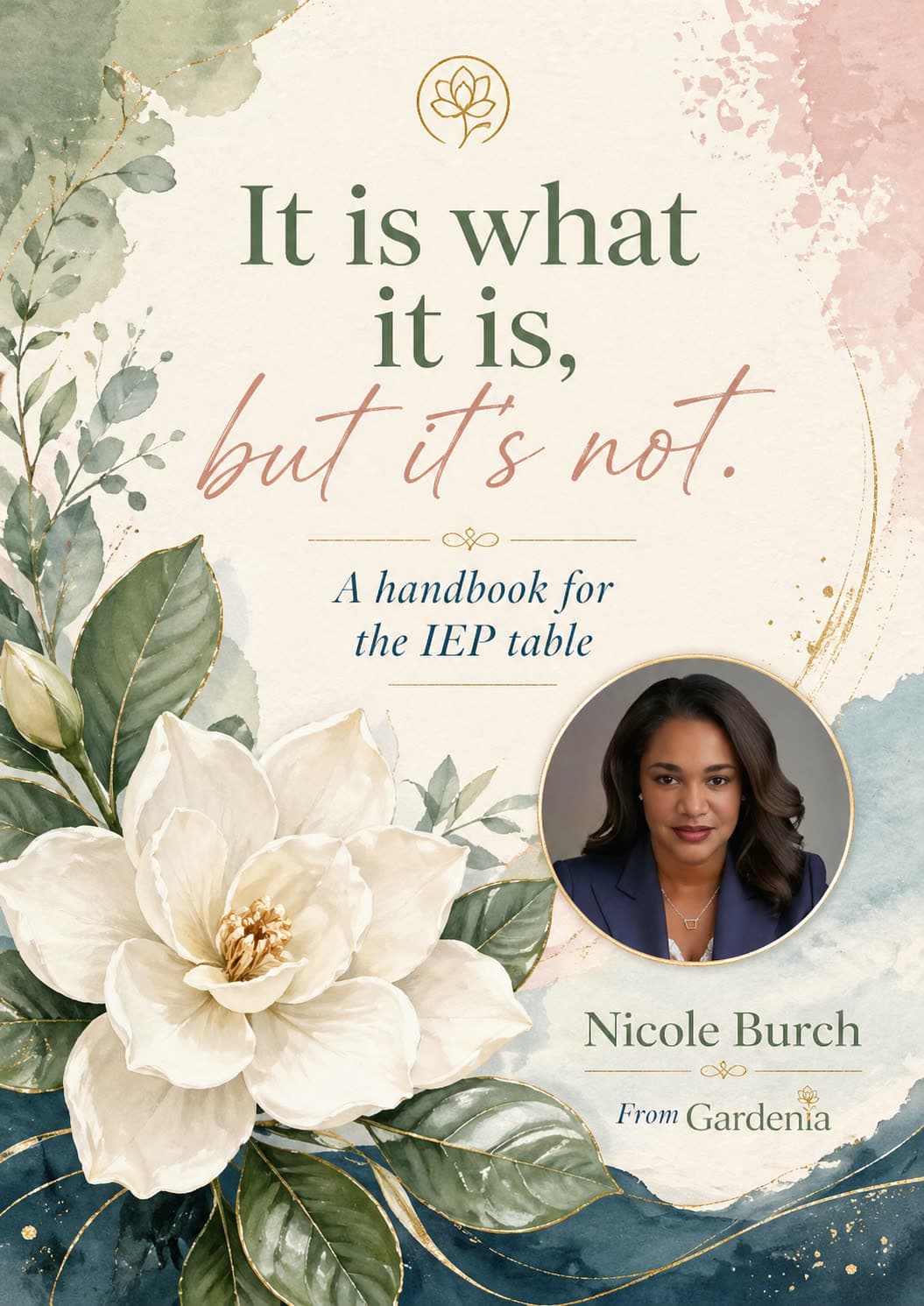
It is what it is, but it's not.
Why the words you've been told are sometimes the obstacle, not the diagnosis.
By Nicole Burch · 14 chapters · 312 pages
The book Nicole wished she could hand every parent at the moment of diagnosis. Real-talk, grounded, sassy when it's earned, never cold. The voice that lives inside Gardenia's app — but on paper, end to end, with workbook prompts in the margins.

Meet the author
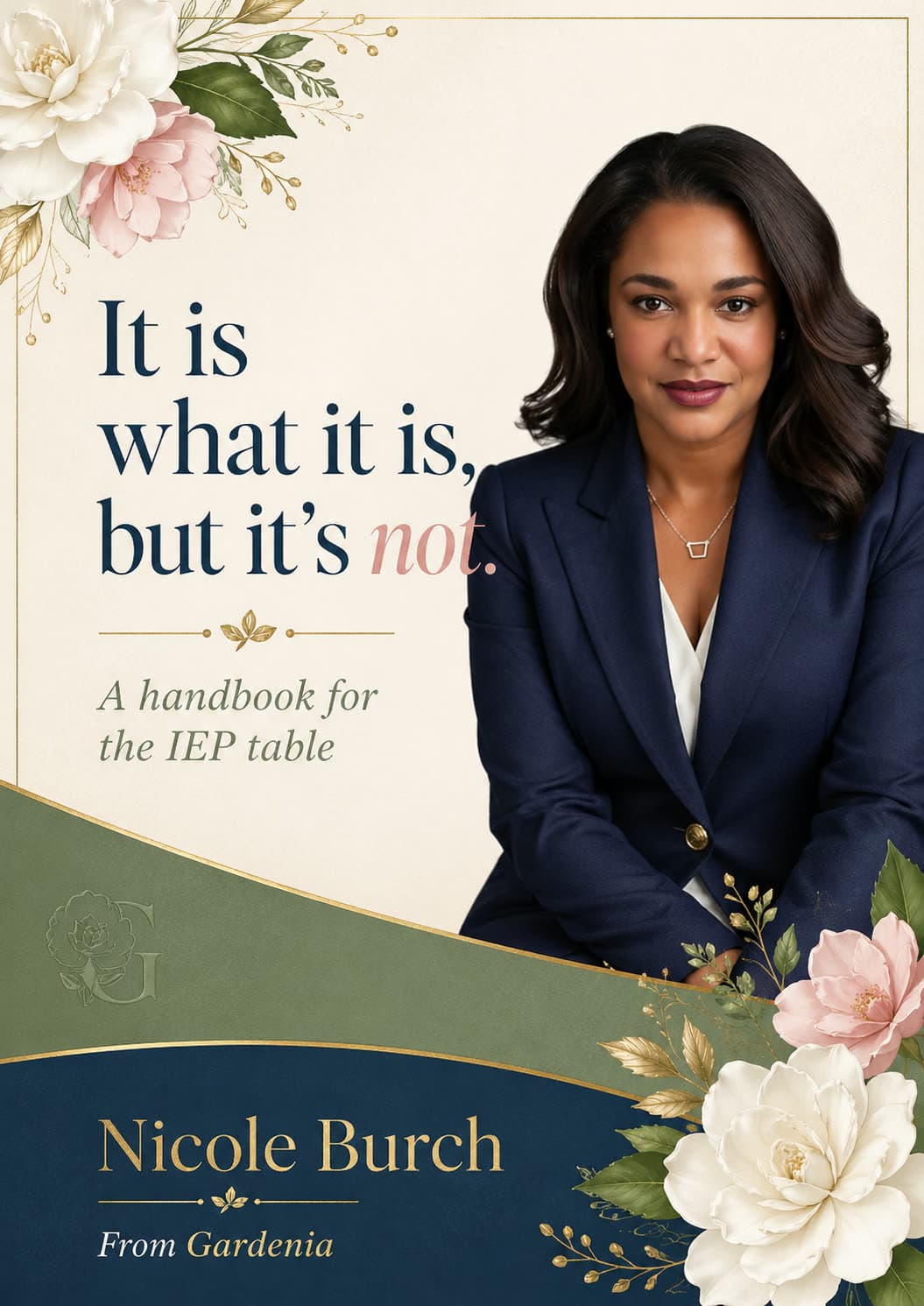
Nicole has sat through every kind of IEP meeting — the calm ones, the contentious ones, the ones with twelve people on one side of the table and a single mother on the other. She's a special educator, an advocate, and a mom. She wrote this book for the parent she meets every September, holding a folder of paperwork no one explained.
“The handbook is the conversation I wish I'd been able to have with every parent beforethey walked into that meeting.”
Signed paperbacks
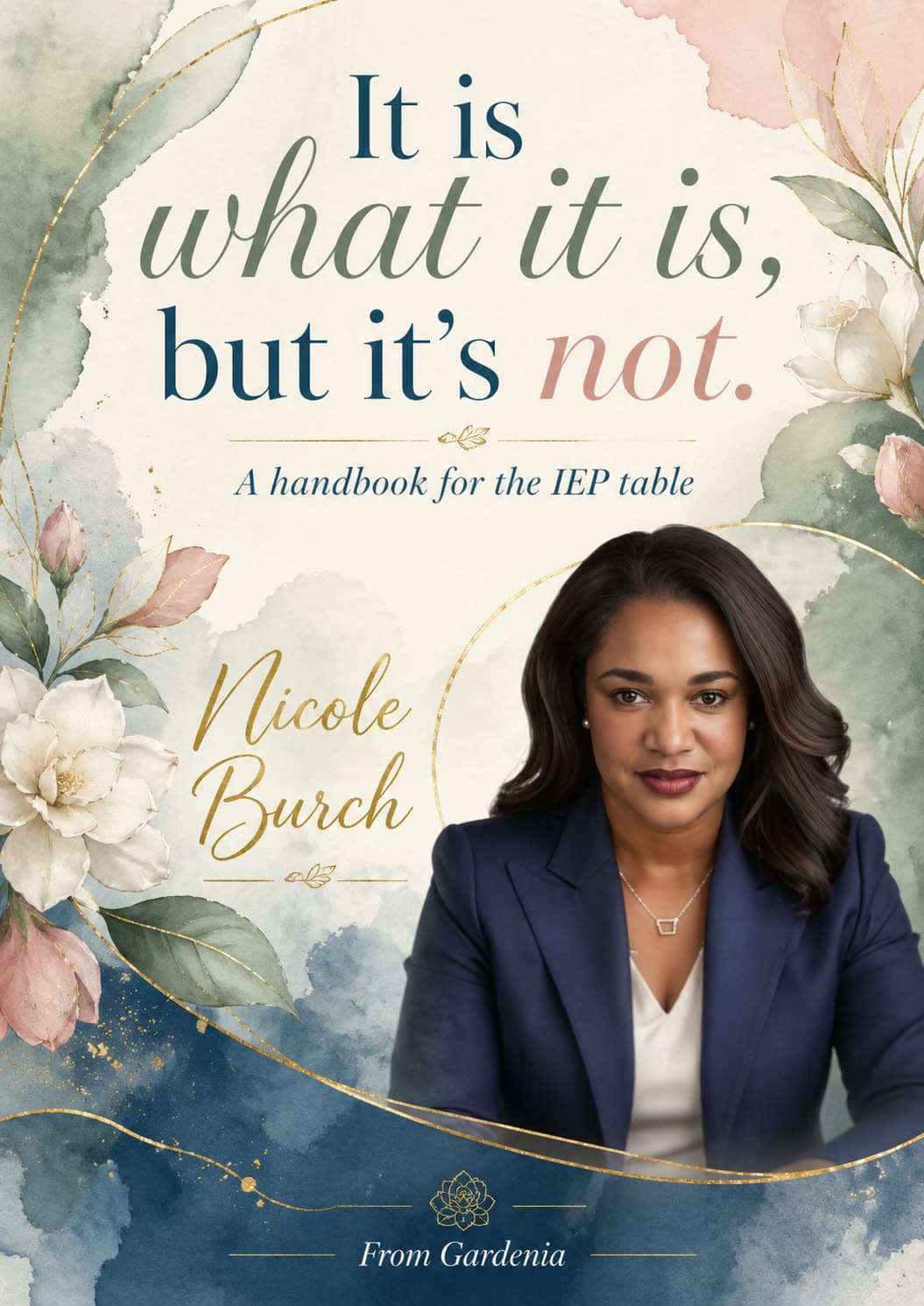
Every Bundle paperback comes with the option to add Nicole's signature on the title page — request it at checkout.

“I read it in one sitting at the kitchen table. Then I re-read chapter 4 the morning of the IEP. I stopped apologizing for asking.”
— Maya R., parent of a 4th grader
Why this book
Nicole writes the way she'd talk to you over coffee — not like a lawyer, not like a textbook. The voice that gets you ready, not anxious.
Letter scripts, meeting agendas, what to bring, what to ask. You leave each chapter with something to use, not a definition to remember.
Every chapter ends with reflection prompts. The app turns the answers into deadlines, letters, and prep packets — automatically.
Nicole has sat through enough meetings to know what's about to happen before it happens. The book gives you that pattern-match too.
The book invites pencil. Underline what hits. Skip what doesn't. Re-read the chapter you need the morning of the meeting.
Bedside-table sized. Cream pages, easy on the eyes. The kind of book you keep — and lend out so often you have to buy a second copy.
Inside the handbook
Each chapter ends with workbook prompts the app turns into actionable todos. Read on paper, work the prompts in Gardenia, walk into the meeting prepared.

Chapter 1
Why the words you've been told are sometimes the obstacle, not the diagnosis.

Chapter 2
What's actually going to happen, who's going to be there, and the questions to bring.

Chapter 4
Procedural Safeguards, translated. One bloom for each right.
All 14 chapters
Why the words you've been told are sometimes the obstacle, not the diagnosis.
What's actually going to happen, who's going to be there, and the questions to bring.
Goals vs services vs accommodations vs modifications. The five sections that matter most.
Procedural Safeguards, translated. One bloom for each right.
How to request them, what 45 days actually means, and what to do when the school stalls.
The structure, the tone, and when to escalate from email to certified mail.
Naming it. Documenting it. Asking for a meeting before it's a crisis.
What changes, what shouldn't, and how to read the proposed IEP before the meeting.
Independent Educational Evaluations, eligibility, and what to push back on.
Manifestation determinations, the 10-day rule, and your child's right to stay in school.
Free, voluntary, confidential. The path most parents skip and shouldn't.
When the school is breaking the law and you need a state agency to say so.
The legal proceeding. When it's the right tool. When it isn't.
Implementation. Progress monitoring. The conversations that keep the plan alive.
A passage from chapter 1
Here's what they don't tell you when the words land: autism, dyslexia, ADHD, processing disorder, mood disorder, intellectual disability. They give you the diagnosis, hand you a folder, and walk back to the next room.
And the parent — usually the mother, let's be honest — sits in that chair and thinks, well, it is what it is.
It is what it is, but it's not.
Your child is the same child. The label is paperwork. The plan is a tool. The meeting is a conversation. And every single one of those things — paperwork, tool, conversation — has rules. The rules favor the parent who knows them. This book is those rules.
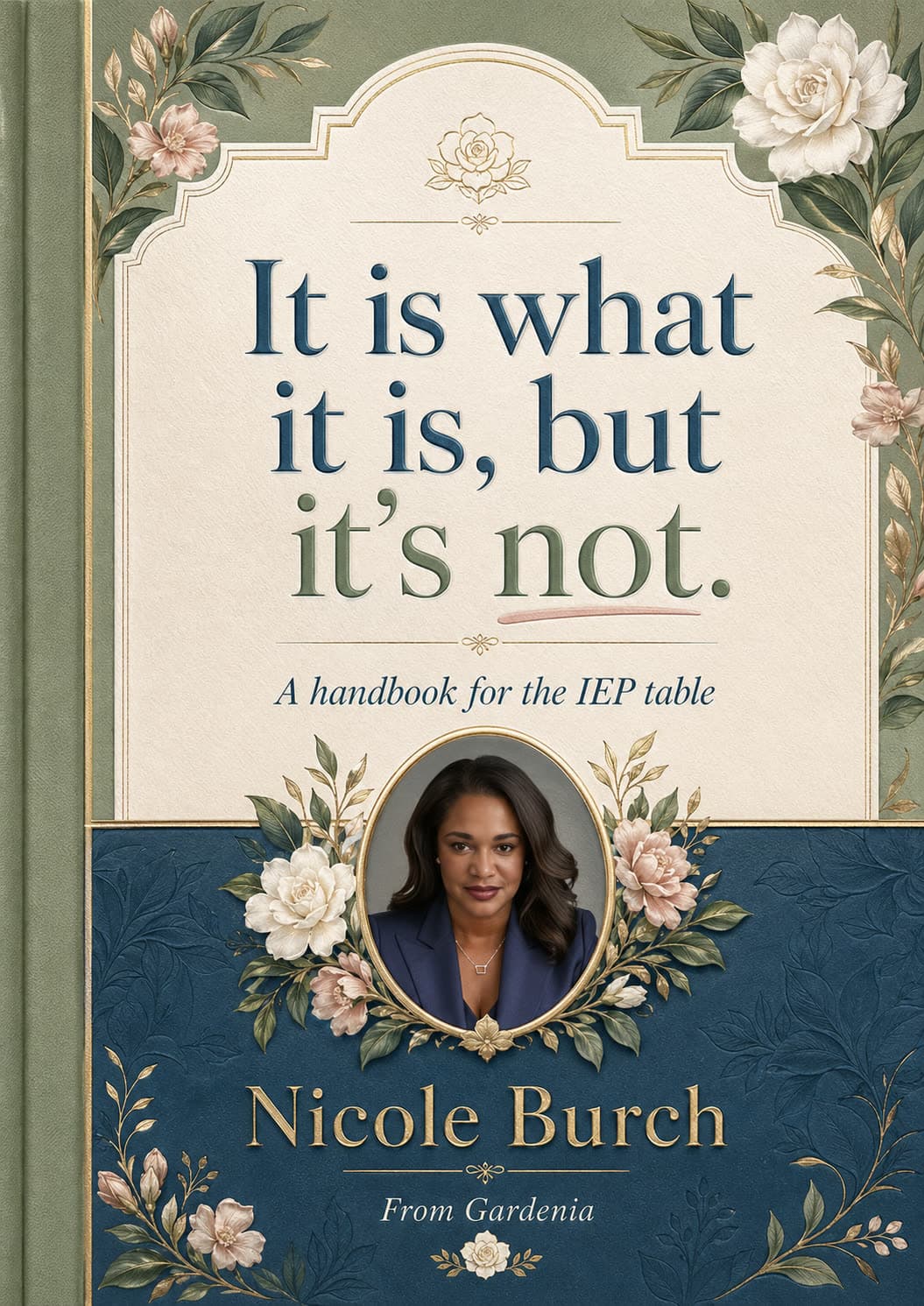
312 pages. Cream paper. Nicole's voice on every one.
What parents say
“I read the first chapter three times before our IEP. It changed how I walked into that room. I stopped apologizing for asking.”
Maya R.
Parent of a 4th grader, Atlanta GA
“Every special-ed parent should have this on the bedside table. Nicole writes like she's already in the chair next to you.”
Dr. Anita P.
Educational Psychologist, Houston TX
“The letter templates alone saved me two weeks of drafting. The workbook in the app turned them into actual sent emails.”
James T.
Parent + advocate, Newark NJ
Bundle
$99 once. Hardcover-quality paperback shipped to your door, plus a full year of Parent Pro inside the app — every chapter readable in the workspace, every workbook prompt linked to the action it suggests.